





QR Code

About Us
Contact Us


Email

Address
No. 1 Taiming Road, Xiaolan Town, Zhongshan City, Guangdong Province,China



Article Summary: Choosing the right ventilation equipment can improve workplace comfort, air circulation, and space utilization. A 30 Inch Oscillating Industrial Wall Fan combines a large fan diameter with a wall-mounted structure and moving airflow to serve demanding commercial and industrial environments. Moxie offers the IWF-750 model, featuring an all-sealed brushless DC (BLDC) motor designed for quieter operation, energy efficiency, and improved resistance to dust and moisture. This guide explains its benefits, applications, selection criteria, maintenance requirements, and purchasing considerations for business buyers.
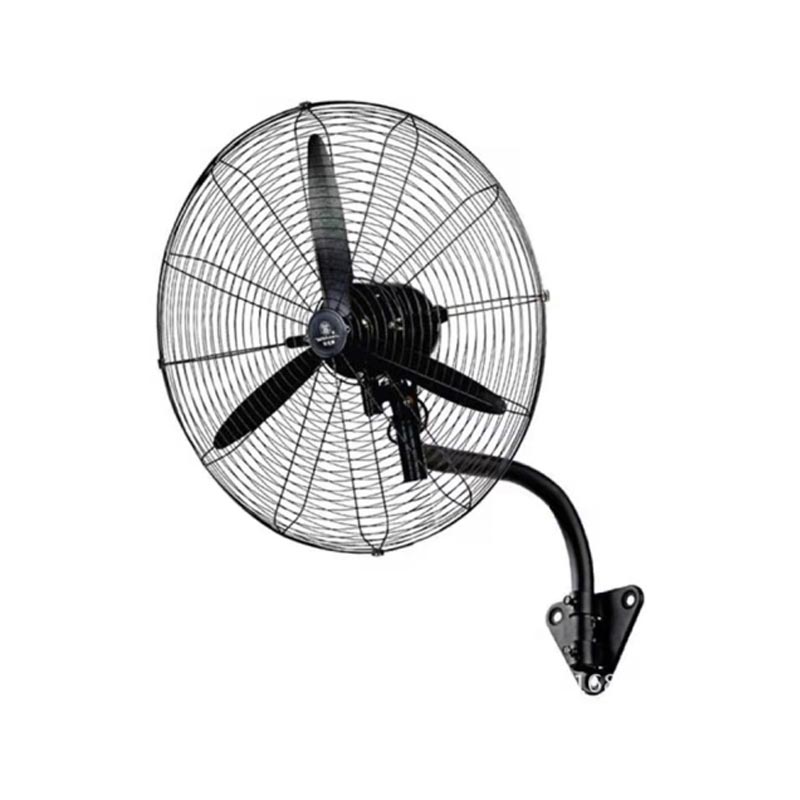
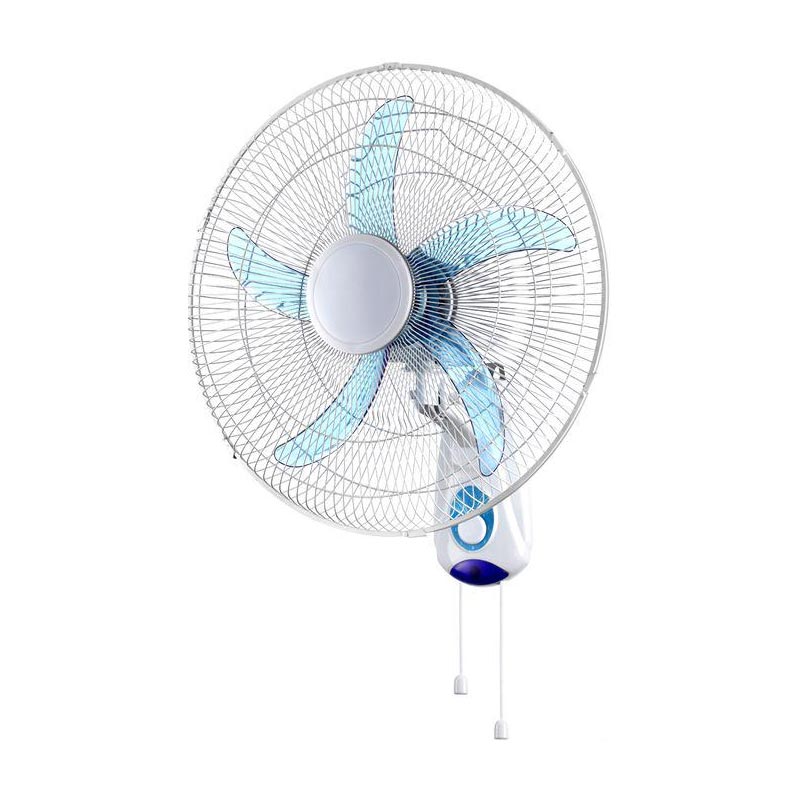
A 30 Inch Oscillating Industrial Wall Fan is a ventilation device designed to move air across work areas while keeping the floor available for equipment, storage, and personnel. Its 30-inch size makes it a practical option for facilities that need broader airflow than a typical small wall fan can provide.
The key difference between an oscillating wall fan and a fixed-direction model is the movement of the fan head. Oscillation allows airflow to sweep across a wider area instead of remaining concentrated in one direction. This can help reduce stagnant air around workstations and improve the distribution of moving air throughout an occupied space.
Moxie Tech Co., Ltd., established in 2014, manufactures electric fans for commercial and industrial applications. Its IWF-750 30 Inch Oscillating Industrial Wall Fan uses an all-sealed BLDC motor and is designed for applications where noise, energy consumption, and exposure to dust or moisture are important purchasing considerations.
For buyers, the decision should involve more than fan diameter alone. Airflow performance, installation height, oscillation range, operating conditions, and electrical compatibility all influence whether a model is suitable for a particular facility.
A large fan can move air through a substantial portion of a workspace, while oscillation helps distribute that airflow across multiple positions. This is particularly useful in workshops, production areas, commercial kitchens, and warehouses where workers may occupy different locations throughout the day.
Effective air movement can make warm environments feel more comfortable by supporting convective and evaporative heat loss. However, a fan does not replace mechanical ventilation, filtration, or air conditioning when those systems are required for temperature control, contaminant removal, or humidity management.
Wall mounting removes the need for a floor-standing base. This can simplify equipment layout in busy facilities, especially where carts, production machinery, pallets, and pedestrian routes compete for limited space.
Correct mounting height and direction remain essential. A wall-mounted fan should not obstruct walkways, emergency equipment, maintenance access, or required clearances.
Industrial fans can operate for extended periods, making motor efficiency an important consideration. Moxie's IWF-750 uses brushless DC motor technology intended to reduce energy consumption compared with conventional AC motor designs.
Actual savings depend on the selected operating speed, power input, daily operating hours, and the baseline fan being replaced. Buyers should compare verified electrical specifications rather than assume a fixed percentage of savings applies to every installation.
Dust and moisture can affect electrical equipment and increase maintenance requirements. The all-sealed motor design of the Moxie model is intended to improve resistance to environmental exposure.
Nevertheless, a sealed motor should not automatically be interpreted as a guarantee that the complete fan has a particular waterproof rating. For outdoor, washdown, or corrosive applications, confirm the product's documented protection rating and permitted installation conditions before ordering.
A brushless DC motor uses electronic commutation rather than conventional mechanical brushes. This design can reduce brush-related wear and support efficient, controlled motor operation. In an industrial ventilation system, these characteristics may contribute to lower maintenance requirements and improved long-term operating economics.
The all-sealed BLDC motor used in Moxie's IWF-750 is positioned for applications where quieter operation, energy efficiency, and resistance to dust and moisture matter. These features can be valuable in facilities that operate fans for long shifts or require ventilation near employees.
Consider the following factors when evaluating motor technology:
For facilities planning multiple units, comparing lifetime operating costs can be more informative than comparing purchase prices alone. A useful calculation includes electricity consumption, installation, maintenance, downtime, and expected service life.
The suitability of a 30-inch industrial fan depends on airflow requirements, room geometry, ambient conditions, and the manufacturer's approved operating environment. Common applications include the following.
Production facilities often contain machinery, workbenches, and concentrated heat sources. Wall-mounted oscillating fans can provide supplementary air movement without occupying valuable floor space. Multiple units may be required to achieve consistent coverage across a large production line.
Storage facilities can have uneven temperature conditions because of their size, ceiling height, and changing occupancy. Properly positioned wall fans can support air circulation around packing stations, picking areas, and employee work zones.
Food-service environments may benefit from additional air movement, but equipment selection must account for grease, cleaning procedures, humidity, and electrical safety. A fan should not interfere with kitchen exhaust systems or direct contaminants toward food preparation areas.
Some loading areas, sheltered workspaces, and other moisture-prone locations may require equipment designed for greater environmental resistance. Before installation, verify that the specific fan is approved for the expected exposure. A sealed motor alone does not establish suitability for direct rain, high-pressure washing, or hazardous atmospheres.
Selecting the right model requires matching the fan's documented performance to the facility's needs. The following checklist helps procurement teams evaluate options systematically.
For larger facilities, it may be useful to create an airflow layout before purchasing. The objective is to distribute air where it is needed, rather than simply maximize the number of installed fans.
Different fan designs serve different operational needs. This comparison highlights their general characteristics; actual performance varies by model.
| Comparison Factor | 30-Inch Oscillating Wall Fan | Fixed Wall Fan | Pedestal Fan |
|---|---|---|---|
| Floor-space usage | Low; mounted on a wall | Low; mounted on a wall | Requires floor space |
| Airflow direction | Sweeps across an area | Primarily one direction | Depends on oscillation and positioning |
| Installation | Requires suitable wall support | Requires suitable wall support | Generally easier to reposition |
| Best use case | Shared work areas needing moving airflow | Specific zones requiring directional airflow | Flexible or temporary ventilation |
| Key consideration | Mounting position and sweep coverage | Potentially limited coverage area | Floor obstruction and stability |
A 30-inch oscillating wall fan can be a strong choice when space efficiency and broader airflow distribution are priorities. A fixed wall fan may be preferable for a defined target area, while a pedestal fan can suit changing layouts that require frequent repositioning.
Explore Moxie's wider industrial fan range to compare available ventilation solutions for different commercial environments.
Correct installation helps protect users, equipment, and the building structure. Because industrial wall fans can be heavy and rotate at high speed, installation should be performed by qualified personnel in accordance with the manufacturer's instructions and applicable local electrical and building requirements.
Do not spray water onto electrical components or assume that a sealed motor makes the complete fan safe for unrestricted washdown. Follow the specific cleaning and maintenance instructions supplied with the product.
For distributors, contractors, and industrial procurement teams, confirming technical and commercial details before placing an order can reduce delays and mismatched expectations.
| Item to Confirm | Questions for the Supplier |
|---|---|
| Model identification | Is the offered model IWF-750, and what is included in the package? |
| Technical specifications | What are the rated power, voltage, airflow, speed settings, and noise level? |
| Environmental protection | What documented protection ratings and installation conditions apply? |
| Installation requirements | What mounting dimensions, wall supports, and electrical connections are required? |
| Customization | Are OEM or ODM options available for the intended order quantity? |
| After-sales support | What warranty terms, spare parts, and technical assistance are provided? |
| Shipping and lead time | What are the production schedule, packaging details, and shipping arrangements? |
Moxie Tech Co., Ltd. offers OEM and ODM cooperation and serves international markets. Buyers should request the latest datasheet and written quotation to confirm current specifications, customization availability, lead times, and warranty conditions.
It is used to provide air circulation in workshops, factories, warehouses, and suitable commercial spaces. Its wall-mounted design saves floor space, while oscillation helps distribute airflow across a wider area.
The IWF-750 features an all-sealed brushless DC motor designed to support energy-efficient, quieter operation and improved resistance to dust and moisture. Buyers should confirm detailed performance specifications directly with Moxie.
It may be suitable for certain covered outdoor or moisture-prone environments, depending on the exact product protection rating and installation conditions. Confirm whether the complete fan is approved for the expected exposure before use.
Energy consumption depends on motor design, power input, operating speed, and usage hours. A BLDC model may offer efficiency advantages over a comparable conventional motor, but actual savings should be established using verified specifications and operating data.
Consider room dimensions, ceiling height, airflow requirements, obstructions, heat sources, and the desired coverage area. Ask the supplier for airflow data and installation recommendations. Large or complex facilities may require a professional ventilation assessment.
Moxie indicates that it welcomes OEM and ODM orders. Contact the manufacturer to discuss the available customization options, minimum order quantities, technical requirements, and delivery schedule for your project.
Routine maintenance typically includes cleaning, checking mounting hardware and guards, and inspecting for unusual noise or vibration. Always isolate the power before servicing and follow the manufacturer's instructions.
A 30 Inch Oscillating Industrial Wall Fan can help businesses improve air circulation while preserving valuable floor space. When choosing a model, buyers should evaluate airflow performance, motor efficiency, oscillation coverage, environmental protection, installation requirements, and after-sales support together. Moxie's IWF-750 is worth considering for projects that prioritize a sealed BLDC motor and flexible industrial ventilation. To identify the right configuration for your facility, compare your operating conditions with the latest product specifications and contact us through Moxie's official product page for technical details, OEM/ODM options, and a quotation tailored to your purchasing requirements.
No. 1 Taiming Road, Xiaolan Town, Zhongshan City, Guangdong Province,China